Table of Contents
ToggleA Holistic Approach to Health: A Whole-Person Guide to Body, Mind, and Well-Being
Author: RVLNSV PRASAD
Updated On: October 2026
About Us
Author Bio
Editorial Policy
Contact Us
Introduction
A holistic approach to health looks beyond a single symptom, body part, or diagnosis. It asks a broader question: What does this person need to support better health in everyday life?
That may include nutritious food, regular movement, sufficient sleep, and appropriate medical care. It may also involve emotional well-being, meaningful relationships, stress management, purpose, living conditions, and access to healthcare.
This broader idea is increasingly reflected in modern health research. The National Center for Complementary and Integrative Health (NCCIH) describes whole-person health as considering interconnected biological, behavioral, social, and environmental factors rather than looking at isolated organs or diseases. NCCIH: Whole Person Health—What It Is and Why It’s Important
That does not mean every practice described as “holistic” is scientifically proven.
It also does not mean replacing doctors with supplements, meditation, herbs, or other alternative treatments.
Instead, a useful holistic approach combines evidence-based healthcare with practical habits that support the whole person.
For someone living in the United States, this can be especially relevant. Work patterns, sedentary time, food access, stress, social connection, neighborhood safety, healthcare access, and financial circumstances can all influence the choices a person is able to make.
The goal is therefore not a perfect wellness routine.
It is to identify the areas that matter most, make realistic changes, and use professional healthcare when it is needed.
Quick Answer: What Is a Holistic Approach to Health?
A holistic approach to health considers physical, mental, emotional, social, behavioral, and environmental influences on well-being instead of focusing only on one symptom or disease.
A practical whole-person approach can include:
- Balanced nutrition
- Regular physical activity
- Adequate sleep
- Stress management
- Mental health support
- Social connection
- Preventive healthcare
- Meaning and purpose
- A supportive home and work environment
- Safe and evidence-based complementary practices when appropriate
The important distinction is that holistic health should complement evidence-based medical care rather than replace necessary diagnosis or treatment. NCCIH distinguishes complementary care, which is used alongside conventional medicine, from alternative care, which is used instead of it. Integrative health combines conventional and complementary approaches in a coordinated way. NCCIH: Complementary, Alternative, or Integrative Health
Key Takeaways
- Holistic health means looking at the whole person rather than one isolated symptom.
- Modern whole-person health research considers biological, behavioral, social, and environmental factors.
- Healthy eating, movement, and sleep form an important physical foundation.
- Mental and emotional health deserve attention alongside physical health.
- Social connection is an important part of overall well-being.
- Purpose and meaning can matter to quality of life, although they should not be presented as medical treatments.
- Your environment can either support or undermine healthy habits.
- Complementary practices should be evaluated individually for evidence, safety, and interactions.
- Holistic health does not mean avoiding doctors or prescribed treatment.
- Small, sustainable changes are generally more practical than attempting a complete lifestyle transformation overnight.
What Does Holistic Health Really Mean?
The word “holistic” means considering something as a whole.
In health, that can mean looking beyond the immediate symptom and considering the person experiencing it.
For example, imagine someone who frequently feels exhausted.
A narrow approach might ask only:
“What is causing the fatigue?”
A whole-person approach can also consider:
- Sleep duration and quality
- Physical activity
- Diet
- Medications
- Mental health
- Stress
- Work schedule
- Social circumstances
- Chronic medical conditions
- Alcohol or substance use
- Access to healthcare
- The person’s living environment
This does not mean assuming the cause is lifestyle.
Persistent fatigue can have many medical causes and may require professional assessment.
The advantage of whole-person thinking is that it prevents health from being reduced to a single dimension.
NCCIH’s current framework specifically describes whole-person health across biological, behavioral, social, and environmental domains. NCCIH: Whole Person Health Framework
Holistic Health, Whole-Person Health, and Integrative Health Are Not Exactly the Same
These terms are often used interchangeably online, but they are not identical.
| Term | Practical meaning |
|---|---|
| Conventional healthcare | Standard medical diagnosis, prevention, and treatment |
| Complementary health | A non-mainstream approach used alongside conventional care |
| Alternative health | A non-mainstream approach used instead of conventional care |
| Integrative health | Coordinated use of conventional and complementary approaches |
| Whole-person health | Considering biological, behavioral, social, and environmental influences together |
| Holistic wellness | A broad wellness concept involving multiple dimensions of a person’s life |
NCCIH explains that integrative health can combine conventional approaches such as medication, rehabilitation, or psychotherapy with complementary approaches such as yoga or acupuncture, with an emphasis on coordinated care. NCCIH: Integrative Health and Whole Person Health
This distinction matters because “natural” does not automatically mean safe, and “holistic” does not automatically mean evidence-based.
The Four-Part Whole-Person Health Model
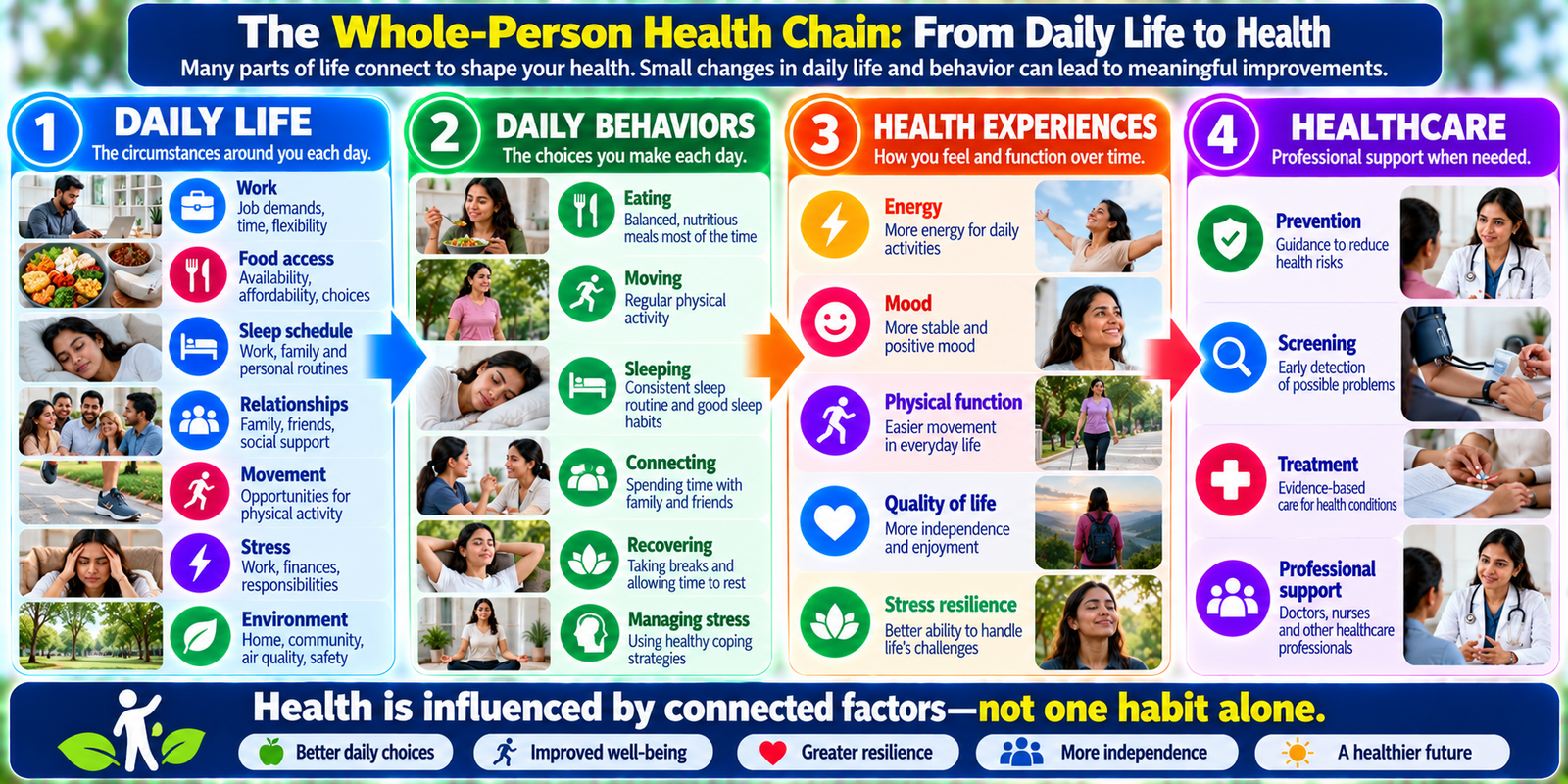
One of the strongest ways to understand modern whole-person health is through four connected areas.
1. Biological
This includes:
- Genetics
- Blood pressure
- Metabolic health
- Muscle and bone health
- Chronic diseases
- Immune function
- Physical symptoms
2. Behavioral
This includes:
- Food choices
- Physical activity
- Sleep habits
- Tobacco use
- Alcohol use
- Stress-management habits
- Healthcare behaviors
3. Social
This includes:
- Family
- Friends
- Community
- Social support
- Employment
- Education
- Financial circumstances
4. Environmental
This includes:
- Housing
- Neighborhood safety
- Food availability
- Air quality
- Workplace conditions
- Access to parks
- Healthcare availability
NCCIH has been developing a framework that deliberately brings these four domains together because health is influenced by interactions between them rather than by isolated factors. NCCIH: Determinants of Whole Person Health
This is one of the most important developments in modern whole-person health research.
Nutrition: Build the Physical Foundation
A holistic approach to health does not require a perfect diet.
It requires a sustainable eating pattern that provides the nutrients your body needs while fitting your culture, budget, preferences, and health requirements.
A practical plate can include:
| Food group | Examples |
|---|---|
| Vegetables | Leafy greens, carrots, broccoli, tomatoes |
| Fruit | Apples, oranges, berries, bananas |
| Protein | Beans, lentils, eggs, fish, poultry, tofu |
| Whole grains | Oats, brown rice, whole-grain bread |
| Healthy fats | Nuts, seeds, avocado, olive oil |
| Fluids | Primarily water and other suitable beverages |
The goal is not to eliminate every processed food.
It is to make nutritious foods easier to choose regularly.
For someone in the United States, this may mean preparing a simple meal at home rather than relying on highly processed convenience foods every day. For another person, however, food affordability or access may be the more important consideration.
That is why a whole-person approach asks not only
“What should you eat?”
It also asks:
“What makes healthy eating realistic for you?”
A People-First Nutrition Strategy
Instead of changing everything at once, choose one meal.
For example:
Breakfast: add fruit and a protein source.
Lunch: add vegetables to the meal you already eat.
Dinner: replace one refined grain serving with a whole-grain option when practical.
Snack: keep fruit, yogurt, nuts, or another suitable option available.
This approach respects real life.
A nutrition plan that looks perfect on paper but cannot be maintained is less useful than a simple eating pattern a person can follow consistently.
Movement Is Part of Whole-Person Health
Physical activity affects more than muscles.
The CDC’s March 2026 guidance notes that regular physical activity provides important benefits for chronic-disease prevention and can improve sleep, reduce feelings of anxiety, support brain health, lower cardiovascular risk, and improve bone health, balance, and coordination. CDC: Health Benefits of Physical Activity for Adults
You do not need to become an athlete to benefit.
Walking counts.
Cycling counts.
Strength training counts.
Dancing counts.
Gardening can count.
Active household tasks can contribute to movement as well.
The most useful activity is often the one that fits your ability and schedule well enough to repeat.
The “Movement Snack” Strategy
One simple strategy is to stop thinking of exercise only as a formal workout.
A movement snack is a short period of physical activity inserted into the day.
Examples include:
- Walking for five minutes after a meal
- Taking the stairs when practical
- Standing and moving during a long work break
- Performing several chair stands
- Walking while making a phone call
- Doing gentle mobility exercises after prolonged sitting
These small actions do not replace a complete exercise program when one is appropriate.
They can, however, reduce the amount of uninterrupted sedentary time in a practical way.
The CDC notes that adults who sit less and perform any amount of moderate-to-vigorous physical activity can gain health benefits. CDC: Benefits of Physical Activity
Sleep Is Not a Luxury
Sleep belongs in any serious discussion of holistic wellness.
It affects physical recovery, attention, mood, and daily functioning.
Instead of chasing complicated sleep hacks, start with the basics.
Try to:
- Keep a consistent sleep schedule.
- Create a quieter evening routine.
- Reduce stimulating activities before bed.
- Keep the bedroom comfortable and dark.
- Avoid treating the bed as an office.
- Address persistent sleep problems rather than simply accepting them.
If someone regularly struggles to sleep despite making reasonable changes, the problem may require professional assessment.
Whole-person health does not mean assuming every sleep problem is caused by poor habits.
Mental Health Is Physical Health Too
Mental health should not be treated as an optional extra.
Stress, anxiety, depression, and other mental health conditions can affect daily functioning, relationships, sleep, activity, and quality of life.
A holistic approach therefore gives mental health the same seriousness as physical health.
Useful strategies can include:
- Regular movement
- Adequate sleep
- Social connection
- Relaxation practices
- Time outdoors
- Journaling
- Structured routines
- Professional counseling when appropriate
These strategies can support well-being, but they are not universal treatments for mental illness.
Someone experiencing persistent depression, severe anxiety, suicidal thoughts or major changes in functioning should seek appropriate professional support rather than relying only on self-care.
A Simple Five-Minute Mental Reset
When your day feels overloaded, try this:
- Minute 1: Stop and slow your breathing.
- Minute 2: Identify the main problem occupying your attention.
- Minute 3: Write down what you can control.
- Minute 4: Choose one next action.
- Minute 5: Return to the task without trying to solve your entire life at once.
The purpose is not to eliminate stress.
It is to create a small pause between the stressful event and your next response.
That makes the technique practical rather than promising a dramatic transformation.
Emotional Health: Make Room for What You Feel
A whole-person approach recognizes emotions as part of normal human life.
You may experience:
- Sadness
- Anger
- Fear
- Frustration
- Loneliness
- Excitement
- Grief
- Contentment
The goal is not to eliminate uncomfortable emotions.
Instead, healthy emotional management can involve recognizing feelings, understanding triggers, and choosing appropriate responses.
Journaling can be useful for some people.
Talking with someone trusted can help others.
Professional therapy can be important when emotional problems become persistent or interfere with daily life.
A holistic approach should never imply that someone can overcome a serious mental-health condition simply by “thinking positively.”
Social Connection Is Part of Health
Social connection is sometimes overlooked when people discuss diet and exercise.
Yet the evidence is increasingly important.
A systematic review of social isolation and physical health in adults found associations between social isolation and poorer physical and psychological well-being, lower quality of life, frailty, and other adverse outcomes. Much of the evidence was observational, so these findings should not be interpreted as proof that isolation directly causes every outcome. Systematic Review of Social Isolation and Physical Health
More recently, a 2026 systematic review of 31 studies found associations between loneliness or social isolation and several chronic-disease-related outcomes, including cardiovascular and cardiometabolic conditions, frailty, functional impairment, and mortality. The authors also emphasized that much of the evidence remains observational and that causal inference is limited. 2026 Systematic Review of Loneliness, Social Isolation, and Chronic Disease
This gives us an important practical lesson:
Connection is not simply a lifestyle decoration. It can be part of a person’s broader health context.
The “One Meaningful Connection” Habit
You do not need a huge social network.
Start with one meaningful connection each day.
That could mean:
- Calling a family member
- Checking on a friend
- Having a device-free meal with someone
- Joining a local group
- Volunteering
- Talking with a neighbor
- Attending a community activity
The goal is quality rather than collecting contacts.
Purpose, Meaning, and the “Soul”
The word “soul” can mean different things to different people.
For some people, this may be connected to religion or spirituality, while others may find meaning through purpose, personal values, identity, creativity, service, or a sense of connection.
These experiences can be deeply important.
However, they should not be presented as medical treatments.
A practical approach is to ask:
“What makes my life meaningful?”
The answer might involve:
- Family
- Faith
- Creativity
- Work
- Service
- Nature
- Learning
- Community
- Helping others
- Personal growth
NCCIH’s Whole Person Health Index specifically includes meaning and purpose in daily life as one of the areas used to assess whole-person health. NCCIH: Whole Person Health Index
That is an important development because it shows that modern whole-person research is attempting to measure more than laboratory numbers.
The New Whole Person Health Index
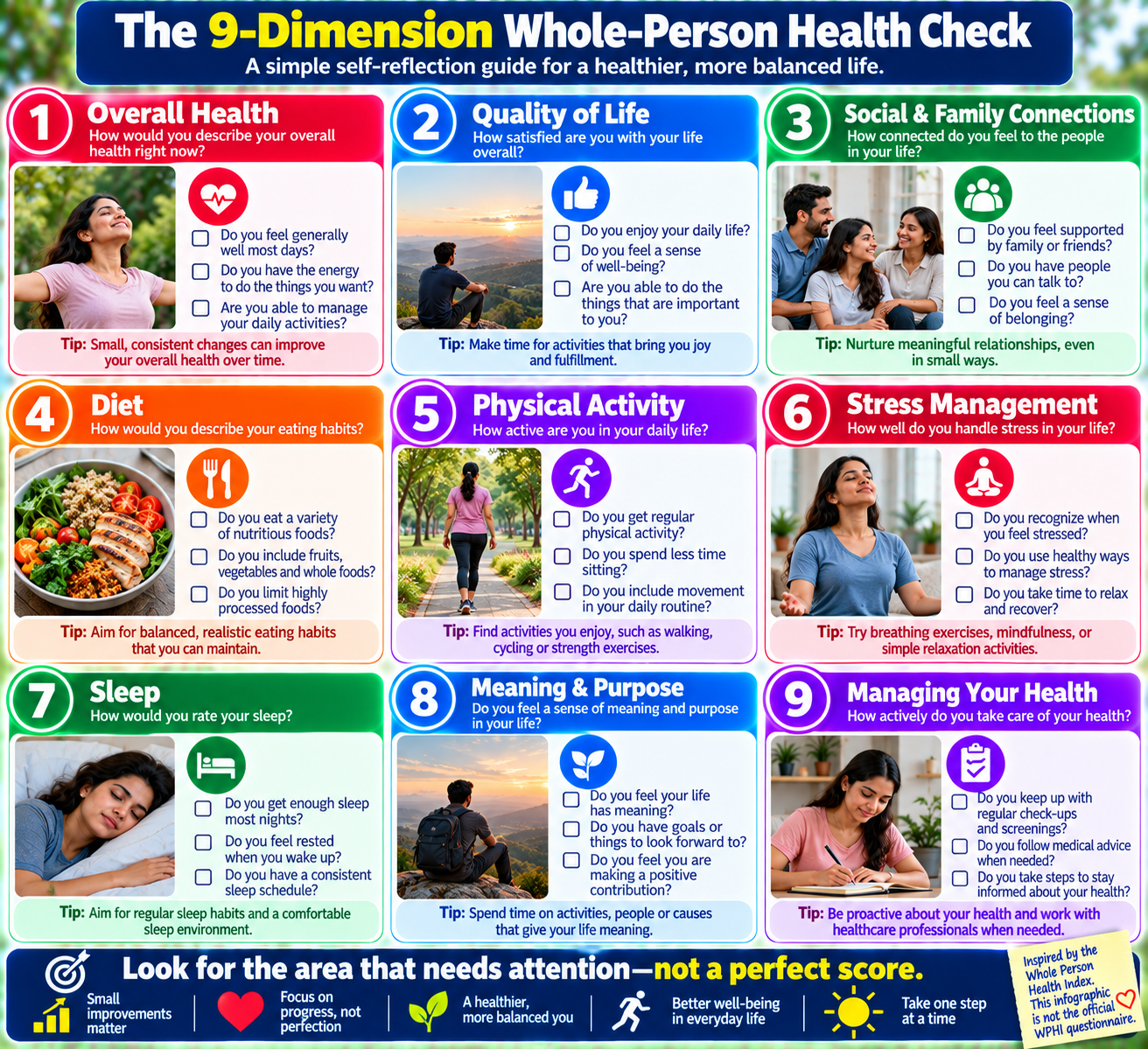
One of the most interesting recent developments is the Whole Person Health Index (WPHI).
Developed by NCCIH and the CDC’s National Center for Health Statistics, the index contains nine self-reported questions covering areas such as:
- General health
- Quality of life
- Social and family connections
- Diet
- Physical activity
- Stress management
- Sleep
- Meaning and purpose
- Ability to manage one’s health
NCCIH: Whole Person Health Index
Research published in 2026 further describes the WPHI as a self-reported tool intended to assess whole-person health rather than relying only on individual disease measurements. 2026 Whole Person Health Index Research Article
This is important because it reflects a change in how researchers think about health.
Instead of asking only:
“What disease does this person have?”
researchers can also ask:
“How is this person’s overall health trajectory changing?”
Your Environment Can Affect Your Health
Sometimes people are told to “make healthier choices” without considering whether their environment makes those choices possible.
Imagine two people.
One lives near a safe walking path, has predictable working hours, and has access to affordable nutritious foods.
The other works long shifts, has limited transportation, lives far from grocery stores, and has no safe place nearby to exercise.
Giving both people the same advice may not produce the same result.
NCCIH’s whole-person framework explicitly recognizes environmental and social factors such as healthcare access, supportive social networks, food access and safe, walkable neighborhoods as important influences on health. NCCIH: Multilevel Interventions and Whole Person Health
This is one of the most important people-first insights in the entire topic.
The “Health Friction” Test
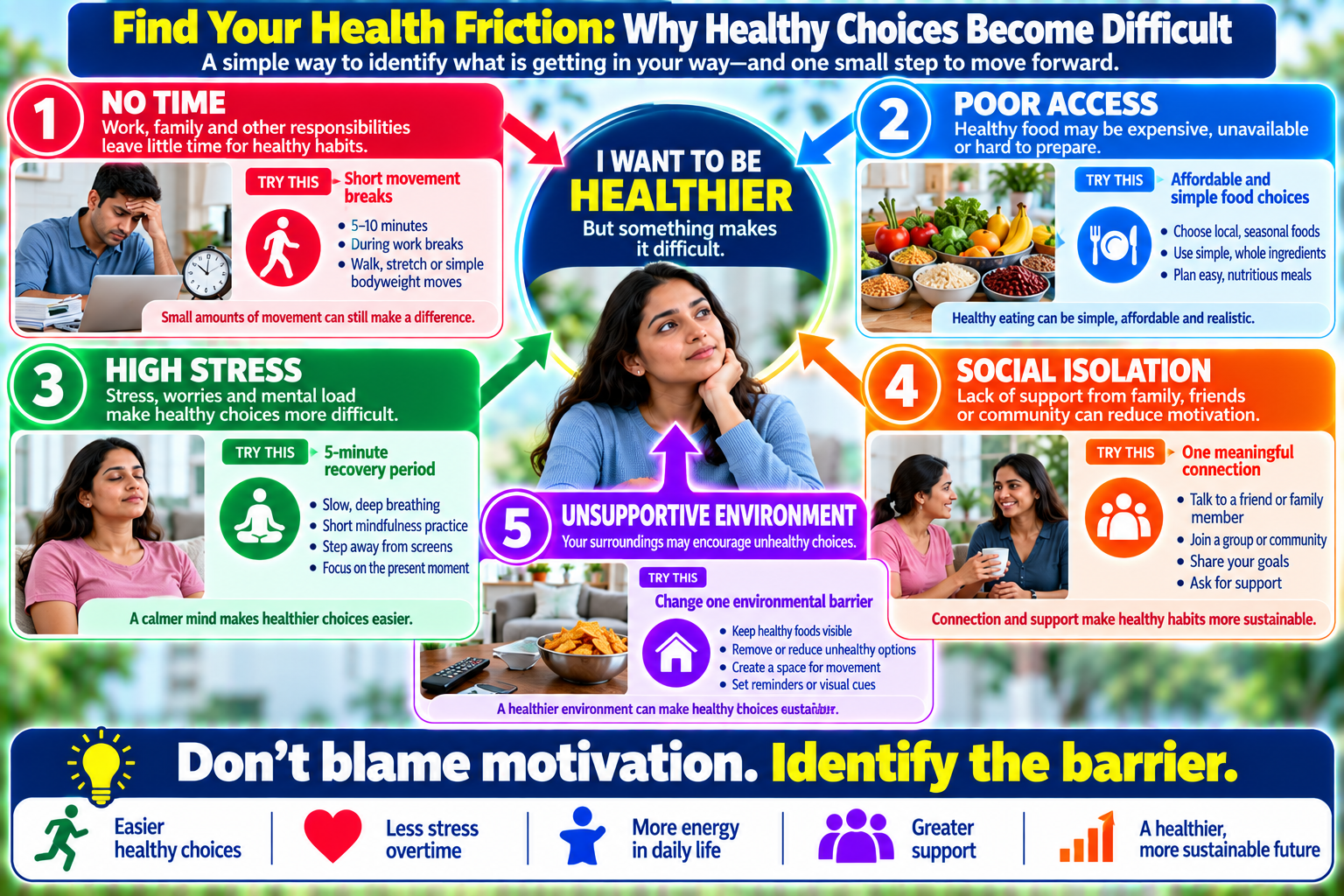
Instead of asking:
“Why don’t I make healthier choices?”
ask:
“What makes the healthy choice difficult?”
| Health friction | Possible practical response |
|---|---|
| No time to exercise | Use shorter sessions. |
| Healthy food is difficult to access. | Plan a few affordable staples. |
| Work causes prolonged sitting. | Add movement breaks. |
| Stress disrupts sleep. | Create a short wind-down routine. |
| Social isolation | Schedule one regular connection. |
| Healthcare feels confusing. | Write questions before appointments. |
| Home environment encourages snacking. | Keep healthier options visible. |
This is more compassionate and often more practical than blaming motivation.
Preventive Healthcare Still Belongs in Holistic Health
A holistic approach should never become an excuse to avoid conventional healthcare.
Preventive care may include:
- Routine checkups
- Vaccinations
- Age-appropriate screening
- Blood pressure checks
- Diabetes screening when indicated
- Cholesterol assessment when appropriate
- Dental care
- Mental health assessment
- Medication review
The correct screening schedule depends on age, sex, family history, risk factors and other individual circumstances.
Whole-person wellness should therefore include both self-care and professional healthcare.
Complementary Practices: What Should You Know?
Some complementary practices have been studied more extensively than others.
Examples include:
- Yoga
- Meditation
- Tai chi
- Acupuncture
- Massage
- Relaxation techniques
But evidence varies by practice and condition.
For example, yoga may be useful as part of physical activity and stress-management strategies for some people. Meditation can be helpful for certain aspects of mental well-being. Acupuncture has evidence for some specific pain conditions.
That does not mean every claim made about these practices is proven.
NCCIH categorizes complementary approaches into nutritional, psychological, physical, and combined approaches and emphasizes research into their safety and effectiveness. NCCIH: Research on Whole Person Health
Natural Does Not Automatically Mean Safe
This is one of the most important lessons for anyone interested in holistic health.
Natural products can have biological effects.
They can also interact with medications.
Some may not be appropriate during pregnancy or for certain medical conditions.
Product quality can vary as well.
Therefore, before using an herbal supplement or concentrated product, consider:
- What is it?
- What evidence supports it?
- What dose is being used?
- Could it interact with medication?
- Is it appropriate for my medical condition?
If you take prescription medicines or have a chronic condition, discussing supplements with a healthcare professional or pharmacist can be especially important.
A Simple Whole-Person Daily Routine
You do not need a two-hour wellness routine.
Try this framework instead.
Morning
Drink water according to your normal needs.
Get some daylight.
Move for several minutes.
Eat a balanced breakfast if it fits your eating pattern.
During Work
Break up long periods of sitting.
Take short movement breaks.
Protect periods of focused work.
Use slow breathing during moments of unnecessary tension.
Afternoon
Eat a balanced meal.
Take a short walk if practical.
Reconnect with your priorities.
Evening
Reduce unnecessary stimulation.
Spend time with someone important to you.
Do something enjoyable without turning it into another productivity task.
Prepare for sleep.
Before Bed
Ask:
- Did I move?
- Did I nourish myself?
- Did I connect?
- Did I manage stress reasonably?
- Did I do something meaningful?
You do not need a perfect score.
The purpose is awareness.
A 5-Point Whole-Person Health Check
The following is an educational reflection tool, not a medical diagnostic test.
| Area | Question |
|---|---|
| Body | How well am I caring for my physical health? |
| Mind | How well am I managing stress and mental demands? |
| Connection | Do I have meaningful social contact? |
| Environment | Does my environment support healthy choices? |
| Purpose | Am I spending time on things that matter to me? |
This framework is inspired by the multidimensional approach reflected in the Whole Person Health Index, but it is not the official WPHI questionnaire or a substitute for clinical assessment. The official index contains nine validated self-reported questions. Official Whole Person Health Index details
My Personal Experience With This Approach
One lesson I have found useful when thinking about everyday wellness is that people often try to change too many things at once.
They decide to exercise every day, completely change their diet, meditate, sleep earlier, remove every unhealthy food, and create a perfect morning routine.
That approach can feel motivating for a few days.
Then ordinary life returns.
Work becomes busy.
Family responsibilities appear.
Energy changes.
The perfect routine becomes difficult to maintain.
A more realistic approach is to identify one area that needs attention first.
- If sleep is poor, begin there.
- If prolonged sitting is the main problem, introduce movement breaks.
- If meals are inconsistent, improve one meal.
- If isolation is the biggest issue, schedule meaningful social contact.
- If stress is dominating the day, create a small daily recovery period.
- The goal is not to become a different person overnight.
- It is to make the next healthy choice easier.
The “One Weak Link” Strategy
Use this simple table to identify where to start.
| If this is your biggest challenge | Start with |
|---|---|
| Poor sleep | Consistent sleep and wake schedule |
| Too much sitting | Short movement breaks |
| Unbalanced meals | Improve one meal each day. |
| High daily stress | Five-minute decompression period |
| Social isolation | One meaningful connection |
| Little sense of purpose | Schedule one meaningful activity. |
| Missed preventive care | Arrange an appropriate healthcare visit. |
| Unsupportive environment | Change one environmental barrier. |
This approach is intentionally small.
Small does not mean insignificant.
It means manageable.
Common Mistakes in Holistic Health
Mistake 1: Assuming everything natural is safe
Natural substances can have side effects and interactions.
Mistake 2: Replacing medical treatment
Holistic wellness should not delay necessary diagnosis or treatment.
Mistake 3: Trying to fix everything simultaneously
Too many changes can become overwhelming.
Mistake 4: Focusing only on supplements
A supplement cannot compensate for consistently poor sleep, inactivity, social isolation, or an unhealthy eating pattern.
Mistake 5: Ignoring the environment
People do not make health decisions in a vacuum.
Mistake 6: Treating spirituality as medicine
Meaning and spirituality may be personally valuable, but they should not be presented as replacements for medical treatment.
Mistake 7: Blaming people for circumstances
Not everyone has the same income, time, neighborhood, transportation, food access, or healthcare access.
Mistake 8: Chasing wellness trends
A practice being popular on social media does not establish its effectiveness.
What the Latest Research Says About Whole-Person Health
Whole-person health is an evolving research field.
NCCIH states that there is growing evidence linking healthy behaviors, environments, and policies with health and disease prevention but also acknowledges an important limitation: there is still a shortage of randomized controlled trials and other rigorous research evaluating multicomponent whole-person interventions as a whole. NCCIH: What the Research Shows About Whole Person Health
This is an important distinction.
There is strong evidence for many individual health behaviors.
For example, physical activity has well-established health benefits. CDC: Physical Activity Benefits
There is also substantial evidence linking social isolation with adverse health outcomes, although causality is more difficult to establish. Systematic Review of Social Isolation and Physical Health
But that does not mean a single “holistic program” has been proven to prevent or treat every disease.
Good health writing should preserve that distinction.
What Makes This Approach Different From a Wellness Trend?
A wellness trend often begins with a product or practice, whereas a whole-person approach begins by considering the individual and their overall needs.
Instead of:
“Which supplement should I buy?”
ask:
“What problem am I trying to solve?”
Instead of:
“Which detox should I try?”
ask:
“What is affecting my health, and what evidence-based steps can address it?”
Instead of:
“How can I eliminate stress completely?”
ask:
“What is creating the stress, what can I control, and what support do I need?”
That change in thinking can make holistic health much more practical.
Frequently Asked Questions
What is a holistic approach to health?
A holistic approach considers multiple interconnected dimensions of health, including physical, mental, behavioral, social, and environmental factors. Modern NIH/NCCIH whole-person-health research uses biological, behavioral, social, and environmental domains as part of its framework. NCCIH Whole Person Health
Is holistic health scientifically proven?
Some individual practices used in holistic or integrative health have substantial evidence, while others have limited or mixed evidence. The term “holistic” itself does not establish that a practice works.
Does holistic health replace doctors?
No. A responsible holistic approach should not replace appropriate medical diagnosis, preventive care, or treatment.
What is the difference between holistic and integrative health?
Holistic health is a broad concept of caring for the whole person. Integrative health generally refers to coordinated use of conventional healthcare and appropriate complementary approaches. NCCIH: Complementary, Alternative, or Integrative Health
Can holistic health help with stress?
Healthy behaviors such as physical activity, adequate sleep, relaxation practices, and social connection can support well-being. However, persistent or severe anxiety or stress may require professional mental health support.
What is the easiest way to start?
Choose one area that is currently weakest. You might begin with a short daily walk, a consistent sleep schedule, a healthier meal, a meaningful conversation, or a few minutes of relaxation.
Does holistic health include spirituality?
It can. For some people, spirituality, religion, purpose, or personal values are important parts of well-being. They should not, however, be presented as substitutes for evidence-based medical treatment.
Is holistic health suitable for older adults?
A whole-person approach can be useful at any age. For older adults, physical activity, strength, balance, nutrition, sleep, social connection, and appropriate healthcare can all contribute to healthy aging.
Can I practice holistic wellness on a budget?
Yes. Walking, basic strength exercises, regular sleep, social connection, time outdoors, and simple home-prepared meals can often be incorporated without expensive wellness products.
Medical Disclaimer
This article is for general educational purposes and does not provide individualized medical advice, diagnosis, or treatment. A holistic approach should not replace appropriate medical evaluation, prescribed treatment, preventive care, or emergency care. Persistent symptoms, severe mental health symptoms, or unexplained changes in health should be discussed with a qualified healthcare professional.
Fitness Disclaimer
Physical activity should be adapted to your age, fitness level, health conditions, and previous injuries. Start gradually if you are inactive. Stop exercise and seek appropriate medical advice if you experience concerning symptoms such as chest pain, fainting, severe shortness of breath, or unusual pain. This article does not provide an individualized exercise prescription.
Author Note
This article takes a people-first approach to holistic health. The purpose is not to promote a particular supplement, wellness product, or alternative treatment.
Instead, it brings together established health behaviors, whole-person research, and practical strategies that can fit ordinary life.
The article also distinguishes between evidence-supported health practices and areas where research is still developing.
That distinction matters because trustworthy wellness information should give readers useful choices without promising results that science cannot support.
Sources
- NCCIH—Whole Person Health: What It Is and Why It’s Important
- NCCIH — Complementary, Alternative, or Integrative Health
- NCCIH—Whole Person Health Index
- 2026 Whole Person Health Index Research Article
- NCCIH—Research on Whole Person Health
- CDC — Health Benefits of Physical Activity for Adults
- CDC — Benefits of Physical Activity
- Systematic Review — Social Isolation and Physical Health
- 2026 Systematic Review—Loneliness, Social Isolation and Chronic Disease
- NCCIH — Whole-Person Health and Multilevel Interventions
Final Thoughts
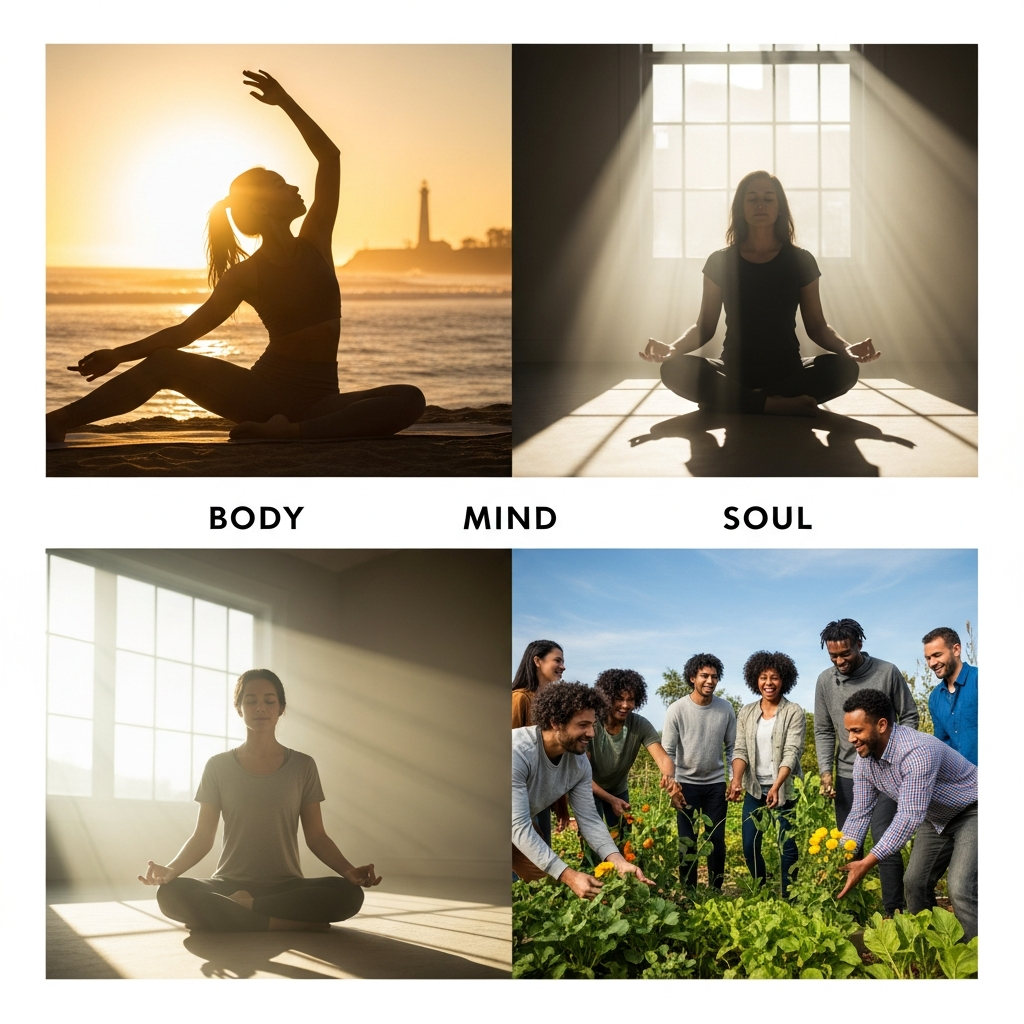
A holistic approach to health is most useful when it moves beyond a simple slogan about body, mind, and soul.
Modern whole-person health research provides a more practical framework.
- Your biology matters.
- Your daily behaviors matter.
- Your relationships matter.
- Your environment matters.
- Your access to healthcare matters.
- Your mental and emotional well-being matters.
- For some people, purpose, values, and spirituality matter too.
These areas do not operate independently.
A stressful work environment can make sleep harder. Poor sleep can make daily activity more difficult. Less activity can affect mood and physical fitness. Social isolation can influence behavior and well-being. Limited access to healthy food or healthcare can make healthy choices harder.
This is why the best holistic health strategy is not a complicated collection of wellness trends.
It is a way of looking at the whole person and the circumstances surrounding that person.
The research is still developing, particularly for complex multicomponent interventions. NCCIH itself highlights the need for more rigorous research in this area. NCCIH—Current Research on Whole Person Health
For everyday life, you can start much more simply.
Improve one meal.
Move a little more.
Protect your sleep.
Make time for one meaningful relationship.
Create a small space for recovery.
Address an important healthcare need.
Remove one barrier that makes healthy choices difficult.
You do not need to perfect every part of your life.
Whole-person health begins by paying attention to the person, not just the problem.
Related Content
- Healthy Habits
- The American Wellness Revolution: How to Thrive in a Fast-Paced World
- 9 Benefits of Yoga for Holistic Health and Well-Being
- 4 Holistic Approaches to Managing Chronic Pain: A Comprehensive Guide
- Integrating Holistic Wellness Into Your Daily Routine: A Comprehensive Guide to Total Well-Being
- How to Achieve Balance Holistic Wellness Practices
Post Views: 1,779